
Sequential Circuits

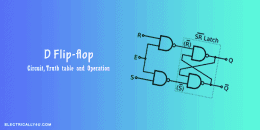
  • What is a flip flop? How it differs from a Latch?

    Flip flops and latches are the two important elements of any digital circuit. They are used as a memory device in digital ICs. Both the flip flop and latch are used to store one-bit data at a time. But there…

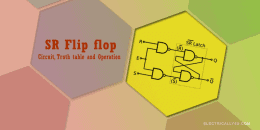
  • SR Flip flop – Circuit, truth table and operation

    SR flip flop, also known as SR latch is the basic and simplest type of flip flop. It is a single bit storage element. It has only two logic gates. The output of each gate is connected to the input…

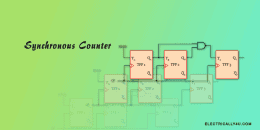
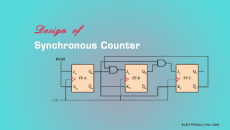
  • Design of synchronous Counter

    The synchronous counters count the number of clock pulses received at its input. The synchronous counter uses the same clock signal from the same source and at exactly the same time. Generally, it is constructed using either JK flip flop…

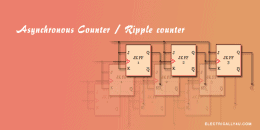
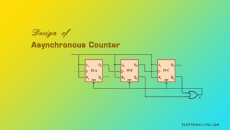
  • Design of Asynchronous / Ripple counter

    The asynchronous or ripple counter consists of series of flip-flops which are not synchronized by the same clock pulse. Design of asynchronous counter involves several steps from selecting the number of flip-flops to drawing the logic circuit diagram. Before entering…

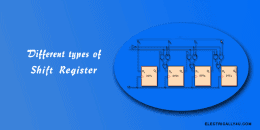
  • Different types of Shift Register

    The shift register is a type of sequential circuit, where the data bits can be stored and can be transferred. Shift registers are constructed using flip-flops, so it is an application of flip-flops. Since flip-flop is a single-bit storage element,…

  • Hazards in Digital Circuits | How to eliminate a hazard?

    Hazards are the unwanted switching transient that may appear at the output of the digital circuit. Such hazards may result in a malfunction in the output of the circuit. The propagation delay associated with the logic gates in the circuit…