
Basic Electrical

  • Electricity and Electrical Engineering : From Power Systems to AI

    Electricity powers almost every layer of modern society. From medical equipment in hospital intensive care units to the data centers that support digital services, from high-voltage transmission networks spanning hundreds of kilometers to large solar farms supplying electricity to the…

  • Electrical Engineering Basics: Core Concepts, Circuits, and Practical Skills

    Electrical engineering is the study, design, and application of systems that generate, transmit, control, and convert electricity, electronics, and electromagnetic energy. An electrical engineer must understand fundamental electrical quantities and basic laws of circuit analysis to do useful work in any sub-discipline.

  • 150+ Basic Electrical Engineering Definitions

    Introduction to Basic Electrical Engineering Terms Mastering basic electrical engineering definitions is the first step for anyone working with electrical energy – whether you are a student, a technician, or an engineer preparing for a professional exam. Electric power supports…

  • Electric Charge: Definition, Types, and Everyday Effects

    Electric charge shapes nearly every interaction in the physical world, from the spark you feel touching a doorknob to the circuits powering the device you are reading this on. Yet many learners find the concept abstract until they see how…

  • Electrical Quantities and Units with Tables and Conversions

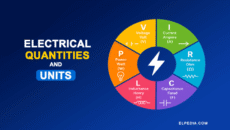
    Introduction to Electrical Quantities Electrical quantities are measurable physical properties associated with electricity and magnetism. Common examples include electric charge, current, voltage, resistance, power, and energy. These quantities help engineers, technicians, and students understand and describe the behavior of electrical…

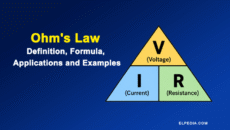
  • Ohm’s Law: Definition, Formula, Applications and Examples

    Ohm’s Law is one of the first equations you encounter in any electrical engineering or physics course, and for good reason. It captures the relationship between voltage, current, and resistance in a single, elegant formula that applies across countless real-world scenarios.

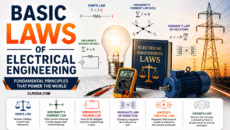
  • Basic Laws of Electrical Engineering

    Introduction to Basic Electrical Engineering Laws The fundamental laws of electrical engineering are called “fundamental” because they express conservation of charge, energy, and flux in any electric circuit or electromagnetic field. Without them, analyzing even basic electrical circuits would be…

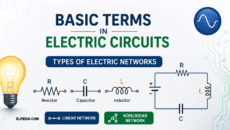
  • Basic Terms in Electric Circuits | Types of Electric Networks

    Introduction to Electrical Networks An electrical network is any interconnection of electrical components like resistors, inductors, capacitors, voltage source elements, current source elements, switches, and more. An electric circuit is an electrical network that contains at least one closed path…

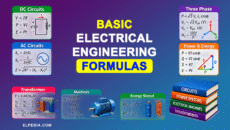
  • Basic Electrical Engineering Formulas with Examples

    Electrical engineering relies on fundamental formulas to analyze circuits, size components, and predict system behavior. Whether you’re studying dc circuits or designing three phase power systems, having the right equations at your fingertips saves time and prevents costly errors. This…

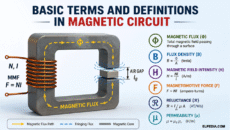
  • Basic Terms and Definitions in Magnetic circuit

    Introduction to Magnetic Circuits A magnetic circuit is a closed path in which magnetic flux Φ is established and guided, typically by a magnetizing coil carrying electric current or by a permanent magnet. Just as electrical circuits provide a route…